Welcome To The Environmental Sustainability Blog About Water
educating humans about their personal impact and the value of this valuable resource
Water is one of earths natural resources that is used for many different reasons. One of the daily interaction’s humans come face to face with is the usage of water for multiple different uses to help complete everyday tasks. Over the past decade environmentalist have brought to the attention of the population the fact that humans are not respectful and are taking advantage of a resource that is very scarce and how people really need to learn the impact on the water consumption that every single person and companies across the world have on this limited resource.
Water Bottle effects on the environment
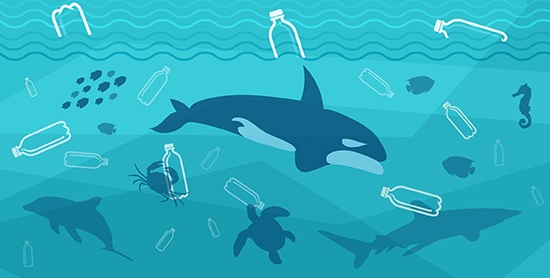
When water is consumed by humans one of the main sources is disposable plastic water bottles. This has been a big issue in the past decade due to the impact it has on the environment. Not only does it cause plastic pollution around the earth that effects the environment, but it also has an impact on the environment by the process in which the water is being bottled. It is estimated that over one year 17 million barrels of oil is used to help machinery inside the bottling plants to help produce water inside the brand names water bottles. (Athompson, 2017 p. 1) It is also been researched that the water waste amount in the bottling procedure is extremely high due to some water being exposed to toxic chemicals that the water could no longer be used to be bottled. The energy and gas that’s used from start to finish of the bottling procedure is no where near what’s need to simply use tap water. The big issue that environmental groups across the world voice their opinion of companies like dasani and nestle which are major players in the water bottle industry are taking a natural resource that is not unlimited and extracting it from the ground and selling it for high price tag to profit millions of dollars off a natural resource. Many issue of extracting too much water and draining the water tables in some regions and once there is no more water the pant closes and moves to the next valuable region. Companies are not only taking harmful amounts of water but the after math of selling the plastic bottles and having customers litter their bottles so that it impacts the environment of harmful waste.
Water availability
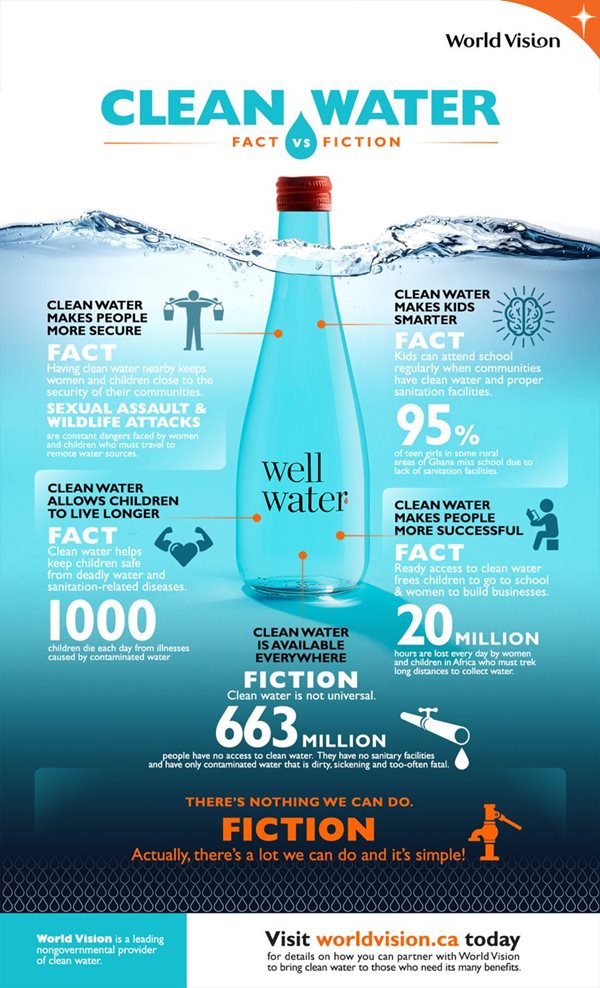
Across the world water availability varies depending on the country you live in. There are many guidelines set out by municipal and federal government that set regulations depending on the country that ensure not only available water source but also make sure clean water is accessible as well. The five criteria are used by the united nations are sufficient, safe, acceptable, physically acceptable and affordable. The five criteria are used to answer the question in terms of sufficient, will the water be available at all times, Safe is talking about is the water safe from bacteria and disease, is the water a good color and smell to be acceptable, for physically acceptable water must be within reasonable distance for the consumer and lastly can people afford to drink the water. Each country in the world has to benefit, and disadvantage depending on their geographical location Canada is strategically located in which it has access to twenty percent of the worlds fresh water supply. In areas where water is insufficient, it Is hard to manage water supply. It would be challenging to find out how much water is available from various sources such as groundwater, pond/lake (surface water) and other natural resources. Another challenge is to figure out how much water should be distributed between communities and industrial areas. Another aspect is a drought, when an area is affected by a drought it is quite challenging to manage water supply because its availability would be so less, so in order to tackle this situation conservation technique and restrictions on usage might have to be considered or implemented by the local government.
Water usage
To break the water usage by categories, three main ones are agriculture, industrial and domestic (domestic use). All the categories listed use water to help keep the economy and keep healthy humans alive. Agriculture is a big consumer of water, and this is because Farmers plant crops and needs h 20 to help nurture the crops and through hydrating and using water as a tool to mix into pesticides chemicals to help defend the crops. Agriculture consumes a lot of water but due to water run off into creeks some of the water is not completed wasted as it is then reusable water. Industrial has two major purposes. One is water is used to help create and manufacture products in which the machinery requires water to help produce a finished good. The other is renewable energy which could be classified as power generating dams that use the downward flow of water to help generate electricity and not wasting a high percentage of water used. A good example of this would be the hoover dam that uses water to help power near by cities. Domestic use is most known to everyday people because they have first hand experience and interaction in their daily routines. From waking up brushing your teeth, using water as an ingredient to make food and just filling up with cup with water to clench your thirst are all just daily consumption of the natural resource. From sports fans who like going to the hockey rink to golfers, water is used to help form the playing field for sports and is sometimes so used that people have become unknowingly blind to the fact that water is an essential need for human living but for some environmentalists the idea of continuing on a blind eye of the amount of water wasted is alarming.
Monitoring and preventing water pollution
In order to ensure the supply of freshwater resources, it is required to establish fundamental tools for the management of water quality and waste water monitoring. These tools provide essential information about the characteristics such as physical, chemical and biological status of water resources, it helps in determining the changes in trends, time and emerging quality of water concerns. With these tools it will be easy to identify policies and measures to enhance the quality of water, wastewater and water pollution caused by specific sources. Thus, it is important that monitoring and preventing water pollution issues should be understood in the proper way of hydro logical processes.
Monitoring and preventing water pollution requires attention from all the countries in the world because if these tools are not implemented, then it would be hard to stop water pollution and at certain time in the future there would very little fresh water to drink.
Water Treatment
Water treatment is required in order to ensure everyone will be able to drink germ free and safe water. Drinking water sources are usually getting contaminated and needed certain treatment in order to eliminate any potential germs or disease-causing agents. These sources use various ways of water treatment methods to ensure the supply of safe drinking water for the community.
The most common steps involved in water treatment used by community water systems are:
- Coagulation
- circulation
- Sedimentation
- Filtration
- Disinfection
- Storage
“Water and air, the two essential fluids on which all life depends, have become global garbage cans”
Jacques Yves Cousteau
After reading this blog hopefully you have gathered a great amount of knowledge about one of earths most valuable resource. hopefully that the knowledge you learned can be applied in the world in order to help preserve the water supply that humans have. Water is a great natural resource that humans would have great difficulty without so its up to every person to do their part to ensure a safe future for water as it will provide a great future for the entire human race.
References
http://www.gogreen.org/blog/impacts-of-plastic-water-bottles
https://en.unesco.org/waterquality-IIWQ/activities-projects/monitoring-water-quality-wastewater
https://www.wateronline.com/doc/the-hottest-topics-in-wastewater-what-you-need-to-know-0001
https://www.cdc.gov/healthywater/drinking/public/water_treatment.html
Follow My Blog
Get new content delivered directly to your inbox.
 water
water 